Colombia has elected a new parliament and presidential elections are due in a few weeks’ time. Ricardo Cardenas takes stock of the achievements and mistakes of left-wing President Petro. And he analyzes what chances the left-wing candidate Cepeda has in the upcoming presidential elections.
On March 8 of this year, Colombians were called upon to elect a new parliament, and in May a new president. The elections will take place in a polarized country. In 2022, the candidate of the left-wing alliance Pacto Historico Gustavo Petro won the presidential elections in Colombia. The left had also come to power in other Latin American countries at the time, such as Chile. In the meantime, there has been a shift to the right in large parts of the continent. Right-wing candidates have recently won elections in Chile, Honduras, Costa Rica and Bolivia with Trump’s blessing.
Can the left-wing alliance in Colombia succeed in getting its presidential candidate through? Would this leave a strong left-wing bloc in Latin America with Brazil, Mexico and Colombia?
The current election campaign scenario
The establishment, the big traditional media, the right-wing parties and their supporters are trying to turn back the clock and undo the achievements of the first progressive government of the republic with its president Gustavo Petro. Now the Colombians will decide whether the reforms that Colombia urgently needs can be continued or not.
One handicap of Petro’s presidency was that he could not rely on a stable majority in parliament. In the 2022 parliamentary elections, the Pacto Histórico (an alliance of left-wing parties) was elected as the strongest force in the Senate. Of the 108 seats in the Senate, 20 went to the Pacto Histórico. Comunes, the party of the former guerrilla FARC, won 5 seats. A further 9 seats went to other left-wing MPs, meaning that the Petro government was initially able to unite 34 senators behind it. The other parties (Liberals, Conservatives, Right, Greens etc ) held more than 2/3 of the seats, so that Petro had to govern with changing majorities.
In some cases, the right-wing opposition was able to torpedo important government reform projects. This was particularly true of the healthcare reform. The Senate refused to approve a reform that would have drastically changed the healthcare system and finally guaranteed health as a universal right for everyone, especially the poorer Colombians.
In the parliamentary elections on March 8, the Pacto increased its number of seats in the Senate to 251 and in the House of Representatives from 28 to 42 seats, with the House of Representatives having a total of 188 seats. In both houses, other representatives of some smaller parties belong to the left, but a new left-wing president will once again have to rely on changing coalitions with liberals and conservatives.
The achievements of the Petro
The results of Petro’s four-year presidency are certainly impressive.
- The minimum wage has risen by 42.35% to around € 327.
- The unemployment rate has fallen to an unprecedented level of 8.8%.
- Under the Petro presidency, Colombia’s economic growth averaged 2.7% – the fourth best of all OECD countries according to OECD statistics.
- Medical care in rural regions has reached more than 5.5 million families. Child mortality due to malnutrition has fallen by more than 42%.
- A lot has happened in education: higher education is no longer just a privilege of the wealthy classes. 97% of students do not pay tuition fees. The number of university students increased by more than 50% between 2022 and 2025 In early childhood education, 36.2% more places were created for pre-school children and 72.1% more places in nurseries.
- In the area of school building infrastructure, the Ministry of Education has invested heavily in improving schools, particularly in rural areas. By the end of 2024, more than 1,000 schools across the country had been renovated within two years, improving the conditions of learning spaces, internet connections and the availability of educational resources.
Currently, 1,725,000 pupils benefit from the extension of the school day. This means not only more time in school, but also a secure school lunch and a diverse range of offerings in areas such as arts, culture, sports, bilingualism, science, technology and innovation, language, math and peace education, promoting the development of life skills. - An important project of the government is the energy transition to initiate the decarbonization of the economy. Under Petro, 3.1 gigawatts of solar and wind energy have been integrated into the national energy system, meaning that the country now has 13.87% clean energy in its energy mix. The country’s two refineries produce 30,000 tons of green hydrogen annually, and the goal for 2040 is to produce one million tons of green hydrogen to meet current and future demand and even export hydrogen. In this context, it should be mentioned that the cooperation with the German traffic light government was fundamental for the implementation of the energy transition, and the decentralization of the electricity and water supply has progressed. Rural areas have finally been supplied and are therefore largely independent of the energy companies.
- The successes in foreign and environmental policy are also worth mentioning. President Petro’s commitment to multilateralism and initiatives aimed at this have led to considerable successes during his time in office. Particularly noteworthy is the resumption of diplomatic relations with Venezuela, which has made it possible to stabilize the border region. In addition, the Petro government has strengthened relations with Africa and promoted economic and political cooperation with this continent forgotten by the country’s old elites. This is more than necessary: Almost 10% of the population has African roots and Colombian culture embraces African traditions.
Petro has also strengthened Colombia’s influence on global climate issues, positioned himself as a committed environmental representative at international forums and confidently called on the Global North to take action against climate change, including in the name of species conservation.
A large part of the social and infrastructure investments were financed by an increase in income tax and the temporary abolition of petrol subsidies. Subsidies for diesel remained in place because public transport (buses), which is used by the poorer sections of the population, is dependent on diesel. However, a second increase in income tax no longer found a majority in the Senate.
What didn’t go well under Petro?
However, the Petro presidency is not all rosy.
The policy of total peace has largely failed.2 The result of negotiations with all armed groups such as the ELN, the dissident groups of the FARC (the EMC and the Segunda Marquetalia), as well as with right-wing paramilitaries such as the Clan del Golfo or The links with right-wing paramilitaries such as the Autodefensas Gaitanistas de Colombia (AGC, a group linked to drug trafficking that is present in the north of the country), the Autodefensas Conquistadoras de la Sierra Nevada from the area around the city of Santa Marta, and local gangs from Buenaventura, Medellín and the Valle de Aburrá and Quibdó are meagre.
The expectations of the talks with the ELN were not fulfilled, although agreement was reached on some points of the negotiating agenda at the beginning. There was a ceasefire, but the ELN continued to adhere to the “business model” of kidnappings, although the negotiating agenda had strictly forbidden this. When the government entered into direct negotiations with Comuneros del Sur, a front that rebelled against the national leadership of the ELN, this angered the guerrillas and they withdrew from the negotiating table. The final break came in January, when the group launched a violent offensive against dissidents of the former FARC in the Catatumbo region.
The groups directly linked to the drug trade are currently not interested in continuing the peace negotiations. This can partly be explained by the fact that the government’s strategy has not been consistently thought through to the end. For example, the policy of substituting coca cultivation with the cultivation of cocoa plants requires investment in infrastructure such as the construction of new roads so that the substitute products can reach the market. These investments have only been made to a limited extent. Until now, the drug dealers themselves have collected the coca leaves and taken them to the laboratories for further processing. However, the government is resolutely combating the cultivation and marketing of cocaine. To date, the government has confiscated more than 2,800 tons of cocaine. No previous government had been able to show comparable figures. This topic was also part of the conversation between Trump and Petro on February 3, 2026.
Added to this are Petro’s management mistakes. There have been countless cabinet reshuffles that were difficult for voters to see through. The inclusion of controversial politicians in the cabinet, such as the current interior minister, who is accused of beating up his wife in Spain, or the current ambassador to the UK, who is actually a careerist without a left-wing past, have also caused resentment not only among the government’s supporters.
The balance of power in the current presidential election campaign
Overall, however, Petro’s policies for Colombia, the country with the greatest inequality in the whole of South America, have borne fruit for the people who have been forgotten by the establishment for decades. This gives hope that the elections for the presidency can be won by progressive forces.
Last October, an internal Pacto Histórico vote was held among members and supporters to determine who would represent the Pacto Histórico in the cross-party primaries for president. Around 2.8 million people took part in this decision, with Iván Cepeda receiving more than 65% of the vote. The second most votes were received by former Health Minister Carolina Corcho, who will therefore be the leading candidate for the Senate.
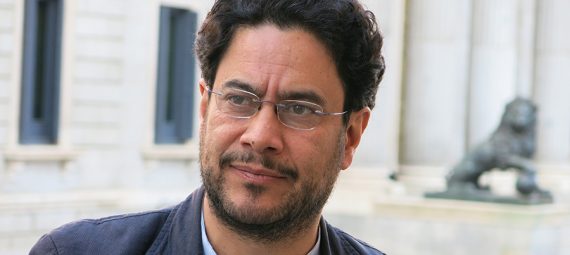
Iván Cepeda has been a member of parliament since 2010, first as a representative of Bogotá in the House of Representatives and since 2014 as a Senator of the Republic. He is a philosopher and human rights activist. His strengths are the integrity and coherence of his political actions. Cepeda is a staunch opponent of former President Álvaro Uribe, whom he criticized for human rights violations during his political career. In April 2012, when Cepeda was a deputy in the House of Representatives, he convened a debate on paramilitarism in Antioquia, in which he addressed the suspected links between Uribe and his confidants and the paramilitaries during his term as governor of the department. Later, as a senator, he confronted Uribe again in a debate on paramilitarism in Colombia, this time in his presence. Uribe charged Cepeda with witness tampering before the Supreme Court. After a thorough examination by the court, it acquitted Cepeda of all charges and found that Uribe, through his lawyer Diego Cadena, had been guilty of witness tampering with the intention of persuading these witnesses to testify against Cepeda.
Cepeda succeeded in bringing Uribe before a proper court. After many court hearings, Uribe was sentenced to 12 years in prison in the first instance. In the second instance, however, Uribe was acquitted by 2 to 1 – the Court of Cassation of the Supreme Court must now make the final decision.
Ivan Cepeda is currently clearly leading in the polls and will almost certainly make it to the run-off elections. Due to his long and impeccable political career, he is very well known in Colombia and enjoys a high reputation.
And who are the opponents of the Pacto Histórico and the presidential candidate Iván Cepeda?
It is not yet entirely clear who on the right side of the political spectrum will be Iv Cepeda’s opponent in a probable run-off election.
The Centro Democrático (CD) party of former President Uribe chose Senator Paloma Valencia as its candidate for the presidency in a telephone poll within the CD, in which only 2,255 (!) people took part. However, Senator Paloma Valancia has now achieved a brilliant 46% in the primaries within the right – which took place at the same time as the parliamentary elections – and is therefore likely to be the favorite of the right-wing camp. Paloma is the granddaughter of President León Valencia, who is known for his debauchery and the attack on farmers in 1964. Incidentally, this attack led to the founding of the FARC. One of Paloma Valencia’s most “creative” proposals was to divide the department of Cauca, where she and her ancestors come from, geographically and politically into a separate part for the indigenous people and another for the whites and mestizos.
Another candidate for the presidency is on the extreme right: the lawyer Abelardo de la Espriella. His clients are known to have links to paramilitaries, drug trafficking and money laundering. Thanks to his activities as a lawyer, he has amassed a large fortune, the origins of which the candidate has never been able to clarify. One of his clients is Alex Saab, a Colombian who was granted Venezuelan citizenship by Maduro. He was Maduro’s most important minister and advisor and has been accused of being the mastermind behind money laundering and corruption in the country.
De la Espriella, a mediocre singer and entrepreneur, has also run for president and announced that he will “eradicate” the left and all those who are against the establishment. However, Espriella’s party only received 3% of the vote in the parliamentary elections on March 8.
There are several candidates in the political center:
Sergio Fajardo, former governor of Antioquia and mayor of Medellín, leads the “moderates”. He has already been a candidate several times and is known to the public for going whale watching just when his presence was urgently needed.
Claudia López, former mayor of Bogotá, who has made a name for herself with her xenophobic statements against Venezuelan immigrants, is another candidate. She and her partner are known to be detrimental to the progressive project – despite running for the Greens – as they do not follow up their promises with action and are more likely to implement right-wing rather than left-wing policies.
The right and the center are thus divided so far, and so far there is no common candidate who could stand up to the progressive forces.
Even if Cepeda is not a great orator or tribune of the people, he has won the sympathy of ordinary people thanks to his coherence and integrity. His arguments are clear and concise. It seems certain that he will make it to the run-off. It remains to be seen which right-wing or centrist candidate he will have to face in the second round.
Colombia at a crossroads: Colombians have it in their hands to either vote for progressive policies in the interests of the population and peace or allow the right-wing to undo the reforms and successes achieved.
Footnotes
- In the meantime (as of 13.03.2026), the Pacto Historico has managed to win 2 seats in the Senate and 4 seats in the Camera, and could even win more in both. In addition, various irregularities were observed during the election in March, which may lead to further steps being taken. ↩︎
- Negotiations with the FARC, the largest guerrilla group at the time, were successfully concluded in 2016. This peace process was also supported by the German government. ↩︎
Cover picture: Iván Cepeda Castro, member of the Colombian Senate; URL: https://commons.wikimedia.org/wiki/user:IvanCepedaCastro